
Bridging Learning Gaps: How AI Powered Content Adaptation Supports Both Struggling and Advanced Learners
Transforming K-12 Education Through Intelligent Differentiation and Personalized Learning Pathways with AI Systems

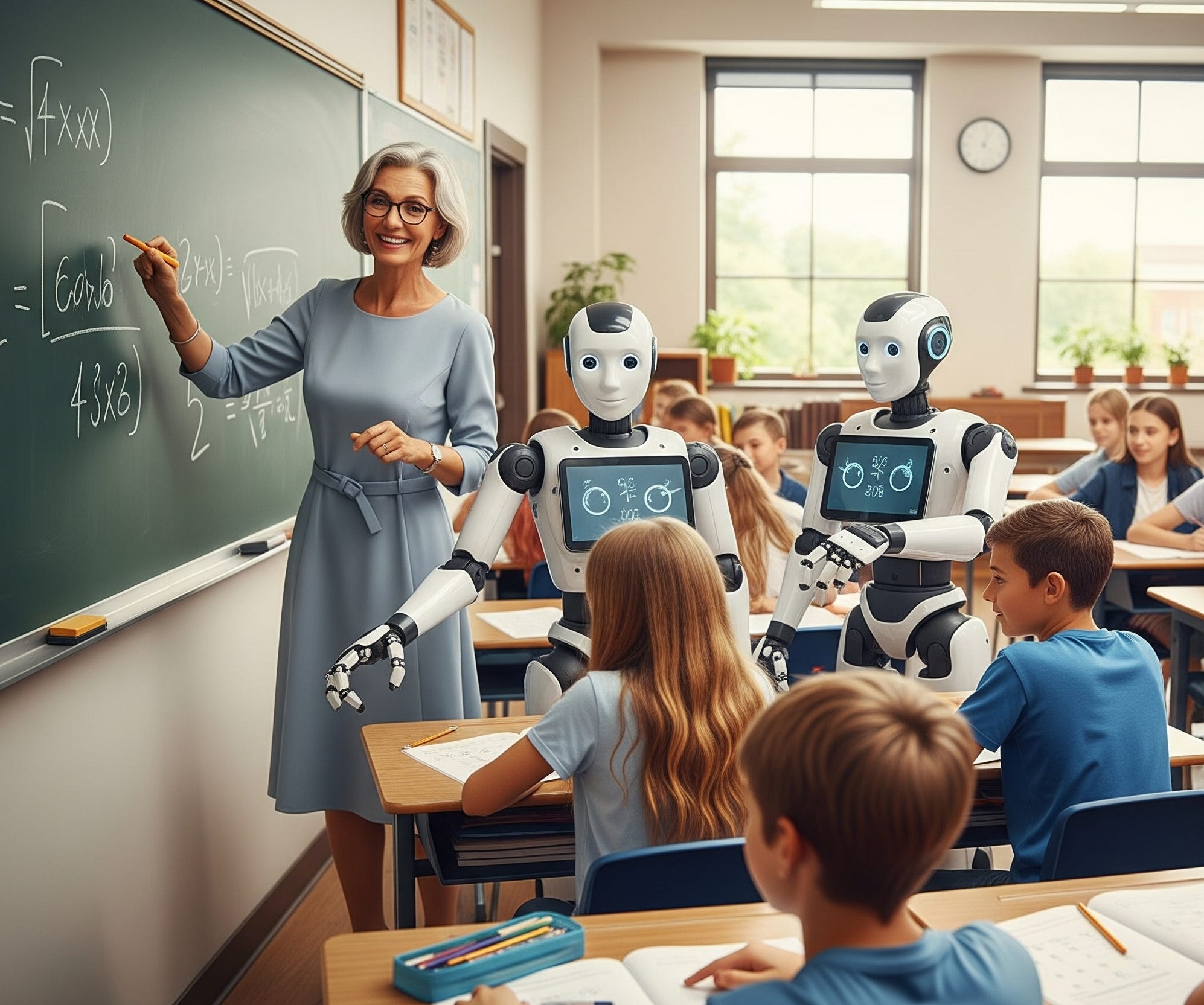
The K-12 classroom presents a diverse range of learners, each with unique strengths, weaknesses, and learning paces, often creating significant learning gaps that challenge educators attempting to provide effective instruction for every student. Traditionally, tailoring lessons to meet individual needs has been an intensive endeavor for teachers. However, the advent of Artificial Intelligence (AI) offers a promising solution. This article explores how AI-powered content adaptation can effectively bridge these learning gaps, providing targeted support for both struggling and advanced K-12 learners, thereby fostering a more dynamic and adaptive educational environment.
**If you do not want to subscribe you can still make a donation here.
The Landscape of Personalized Learning and Differentiation with AI
Personalized learning involves tailoring educational content to each student's unique learning style and pace. AI technologies are revolutionizing the academic landscape by offering unprecedented opportunities for this individualized approach, alongside enhanced administrative efficiency and improved educational outcomes. AI platforms analyze student data, such as test scores, homework, and participation, to identify individual strengths and weaknesses, enabling the delivery of customized lesson plans and practice exercises matched to each student's needs and learning pace.
Differentiation is significantly enhanced by AI through leading tools that instantly create lesson plans, accommodations, and rubrics for varied learners. For instance, Edcafe AI generates differentiated activities and questions tailored to student profiles, including standards aligned content, lesson hooks, and remediation tasks. MagicSchool.ai creates curriculum differentiation at scale, assisting teachers with daily workflows like lesson plans and rubrics. Diffit excels at adjusting texts to multiple reading levels and generating summaries, vocabulary, and comprehension questions, making it ideal for diverse classrooms.
Beyond specific tools, AI enables broader strategies such as flexible grouping based on real-time performance, adaptive content that adjusts difficulty, and real-time feedback that allows for prompt intervention. These strategies transform traditional classrooms into dynamic, adaptive environments where every student can thrive.
How AI Supports Struggling Learners
AI offers crucial support for struggling students by directly addressing their specific learning challenges through adaptive content that automatically adjusts reading passages, assignments, and assessments to match a student's proficiency level. This ensures that material is neither too easy nor too overwhelming, allowing students to build foundational understanding at their own pace.
Intelligent Tutoring Systems (ITS) exemplify AI's capacity to provide highly individualized support. These AI driven programs mimic human tutors, analyzing a student's knowledge, learning pace, and preferred style to adapt content, adjust difficulty, and suggest targeted resources in real time. ITS track each learner's progress, identifying strengths and weaknesses for precise remediation while providing immediate, individualized feedback that is detailed and explanatory, helping students understand their mistakes and improve quickly.
This instant feedback is vital for timely intervention and helps teachers pinpoint areas where instruction needs to be focused. Studies have shown that students using ITS often make faster progress and achieve better outcomes, particularly in subjects like math and reading, with struggling students benefiting most significantly. AI can even detect when a student is "wheel spinning" (working hard but not making progress) and offer specific assistance.
Furthermore, AI enhances equity and accessibility for students from diverse backgrounds or with special needs. Features like text-to-speech, visual recognition, and speech recognition can adapt resources, making previously inaccessible material available to all students. AI tools such as Dysolve can even detect learning disabilities like dyslexia early by analyzing reading patterns, enabling tailored support and interventions.
How AI Challenges and Supports Advanced Learners
While much discourse around AI in education focuses on bridging gaps for struggling learners, AI's adaptive capabilities are equally beneficial for advanced students. Rather than "teaching to the middle," AI allows educators to truly tailor lessons to each student. For advanced learners, AI can adjust content difficulty upwards, increasing the complexity and depth of material for those who have mastered foundational concepts. This keeps advanced students engaged by providing appropriate intellectual challenges, preventing boredom and fostering continuous growth.
AI driven platforms allow advanced students to move through content at an accelerated rate that matches their proficiency, rather than being held back by the pace of the general classroom. This can involve skipping already mastered topics or delving into more advanced subtopics. AI tools can recommend additional resources, activities, and projects that align with advanced students' interests, goals, and learning styles, making lessons more relevant and engaging through interdisciplinary applications or real-life scenarios.
AI can also suggest interactive and hands-on activities tailored to student interests and readiness levels. Curricula like MIT Media Lab's Creative AI, Dancing with AI, and How to Train Your Robot emphasize project based learning, allowing students to design and create their own AI artifacts. This empowers advanced students to apply complex AI knowledge to personally meaningful projects, fostering creativity, empathy, and problem solving skills. Students have crea ted projects ranging from health applications to trash detection using AI classifiers.
By providing this tailored level of challenge and freedom, AI ensures that advanced learners remain motivated and can fully explore their potential, transforming the classroom into a dynamic environment where they can invent and create innovative approaches.
Ethical Considerations and Best Practices for Implementation
Despite the immense potential, the integration of AI in K-12 classrooms carries concerns that must be addressed responsibly. Key challenges include a perceived lack of teacher training for effectively integrating AI into instruction, worries about student cheating and plagiarism with generative AI, and fundamental issues regarding data privacy and security. There are also concerns about algorithmic bias, where AI systems may amplify existing societal biases if not developed with diverse data and rigorous ethical frameworks. Some educators worry about reduced human interaction between teachers and students, which could impact students' social and emotional development. Finally, the high implementation costs of advanced AI systems can be a barrier for many schools. It is important to note here, that with improved teacher education (and psychological “buy-in”) comes the ability to leverage open-source AI solutions, creating a pathway from costly proprietary systems to more affordable, educator-driven implementations that can be customized to specific classroom needs
To maximize benefits and mitigate these risks, "Human in the Loop AI" is a critical recommendation. This principle asserts that educators must remain central to the process of noticing patterns, assigning meaning to them, and making major instructional decisions. AI should serve to augment human intelligence and reduce administrative burdens, not replace the nuanced judgment and empathetic connection of a human teacher. While AI can automate tasks like grading or lesson planning, teachers should retain oversight, be able to inspect AI's recommendations, understand its reasoning, and have the ability to override decisions when necessary. As we will see in future articles here, using tools like Google’s NotebookLM, teachers can control and finely tune the inputs to the AI system for a specific lesson or topic.
Ongoing teacher training and professional development are essential. Educators need to understand AI's capabilities, its ethical implications, and effective strategies for classroom integration. This includes promoting critical thinking and responsible use among students, teaching them to use AI as a resource for problem solving and idea generation, rather than a shortcut for academic integrity. Addressing algorithmic bias requires intentional efforts, such as ensuring that training datasets are representative and continually evaluated for fairness. Furthermore, a holistic approach to student support is vital, balancing the efficiencies of technology with the crucial social and emotional needs of learners.
Conclusion
AI powered content adaptation holds immense potential for transforming K-12 education by effectively bridging learning gaps and catering to the diverse needs of all students. By providing individualized learning paths, adaptive content, and personalized feedback, AI tools can empower struggling learners to master concepts at their own pace and provide advanced learners with challenging, enriched experiences that foster creativity and deeper engagement.
However, the successful and ethical integration of AI in classrooms necessitates a human centered approach. This includes massive mental shift for administration and faculty, continuous professional development for teachers, transparent AI models that can be inspected and overridden by educators, and a vigilant focus on mitigating risks such as algorithmic bias and data privacy concerns. When thoughtfully implemented, AI can serve as a powerful tool, augmenting teachers' abilities and transforming classrooms into dynamic, adaptive environments where every student can truly thrive on their unique learning journey.
In our next article we will discuss the idea of teachers using NotebookLM to create highly controlled and customized learning environments for their students that address many of the concepts discussed in this article.